
.jpg)
Why do we need to think about stormwater management?
Urbanization has fundamentally altered natural landscapes, replacing permeable green spaces with impermeable ones like asphalt and concrete. This inevitable transition has created a critical challenge for cities: managing the vast amounts of stormwater generated during heavy rainfall. The consequences of inadequate stormwater management are clear—flooded streets, overwhelmed drainage systems, and degraded water quality. Climate change with its more frequent and severe rain events is pushing urban infrastructure to its limits. It’s clear that cities need innovative and sustainable solutions to address these challenges. This is where green roof systems step in, offering a forward-thinking approach to stormwater management while delivering additional environmental and social benefits.
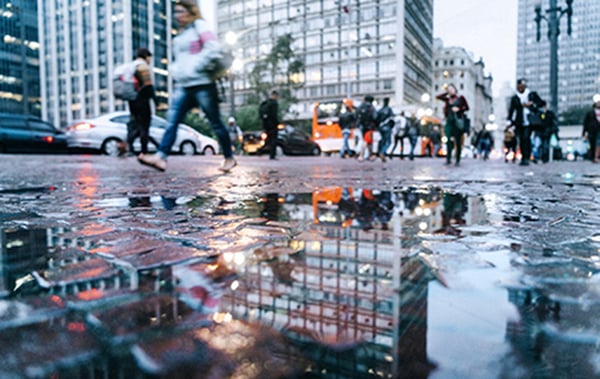
Image source: https://dep.nj.gov/stormwater/
The science about effectiveness of Green Roofs
Green roofs are carefully designed layered systems designed to mimic nature by capturing and managing rainfall. Their design slows the flow of rainfall, reducing immediate strain on drainage systems. But just how effective are they? Their primary function in stormwater management has threefold effect:
- Retention: Green roofs can hold a significant volume of rainwater. Part of it is used for plants growth and for the building’s cooling effect (by evapotranspiration – process which results in urban heat island effect reduction), temporarily storing it. This retained water is returned to the environment in form of water vapor.
- Detention: The rest of the rainwater flow, fallen on the green rooftop, can be delayed and measured by delayed peak outflow and a reduced peak outflow volume. By delaying the flow of stormwater into drainage networks, green roofs reduce the risk of flooding and prevent overburdening infrastructure.
- Runoff quality: Green roofs, when they are appropriately designed, can play a vital role in urban areas by improving the quality of water runoff, which is essential for maintaining healthy ecosystems and reducing pollution. With appripriate configuration, they act as natural filters, capturing and treating rainwater before it enters the drainage system. By doing so, they help mitigate the harmful effects of urban runoff, such as contamination of water bodies with heavy metals, nutrients, and other pollutants.
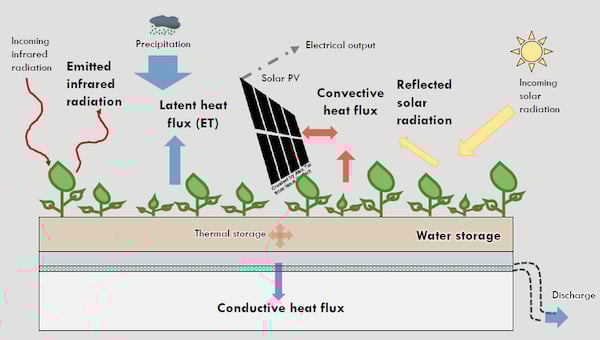
Image source: https://www.eawag.ch/en/department/sww/projects/multi-functional-green-roofs/
Various studies show that green roofs can retain as much as 70–90% of the stormwater they receive during summer months and 25–40% in winter. They not only reduce the volume of runoff but also delay its release, giving urban drainage systems time to cope with sudden rainfall.
According to the recent research by Perez et al (2025) green roofs using rock mineral wool (Green roll) as a substrate layer, demonstrate superior water retention capabilities. These systems also delay peak runoff, effectively alleviating the pressure on urban drainage infrastructure during high-intensity rainfall events. Findings demonstrate that particular use of Green roll in green roof systems offers the following benefits: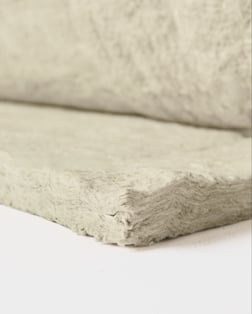
- High Retention Efficiency: Substantial water retention minimizes runoff volumes, particularly useful in urban flooding prevention.
- Water Quality Improvement: Green roll-based systems significantly reduce pollutants, such as total suspended solids (TSS), phosphates, and heavy metals in runoff, contributing to cleaner waterways
- Detention of Stormwater: Green roof systems with incorporated Green roll delay peak runoff, reducing the burden on urban drainage systems during heavy rain events.
Urbanscape Green Roll
Urbanscape innovation in Action
Urbanscape offers customized systems designed to meet the unique needs of every project. Here's how it is done:
- Multiple detention options with specific C-values: Urbanscape's green roof systems provide detention solutions optimized for various water retention and outflow requirements. With precise calculations, these systems ensure efficient stormwater management.
- ProPET Tool for outflow rate calculations: ProPET, an advanced planning tool, allows Urbanscape planners to determine outflow rates for different roof designs. This tool calculates the outflow rates of different green roof systems, ensuring precise and optimal performance for every unique project.

- Custom-designed rooftop systems: Each Urbanscape system is tailored to local climate conditions, rainfall intensities, and project specifications, ensuring maximum efficiency and adaptability.
- Superior water storage volume: With a minimum of 92% of the system’s volume dedicated to water storage, Urbanscape systems provide unique retention capacity, keeping urban areas safe from excessive runoff.
- Weight defined by function, not materials: The weight of Urbanscape stormwater green roofs is predominantly determined by the desired outflow rate and the amount of water to be stored, offering unmatched flexibility.
- Multifunctional integration: Urbanscape green roofs can be combined with solar panels and safety systems, maximizing their utility and sustainability.
- Unique Combination with Urbanscape Green Roll: A standout feature of Urbanscape’s green roof systems is the combination of their stormwater system with the Urbanscape Green Roll specific layer. The Green Roll serves as both a growing medium for vegetation and a water retention layer, holding a significant volume of rainwater. This dual functionality can eliminate the need for a separate drainage layer, reducing material use and enhancing sustainability. The Green Roll can hold substantial water volumes, supporting plant roots and ensuring robust vegetation growth. Very important, but often neglected aspect of water runoff quality, is ensured by use of Green roll layer in the given green roof system.
- Addressing Runoff quality: The Perez et al. study results, published in 2025, showed that solutions with rock mineral wool based green roof systems with needled felt (Green roll), especially those with no substrate, or “substrate-less” solutions, caused leachate levels below the limits of current regulations and also showed better performance than even traditional roofs, both the green roof with pozzolana and the traditional gravel-ballasted flat roof. Since Green roll has a large capacity for water storage, the use of such layer with no substrate layer, or even using a thin substrate layer, could improve both the quantity and quality of urban runoff water.
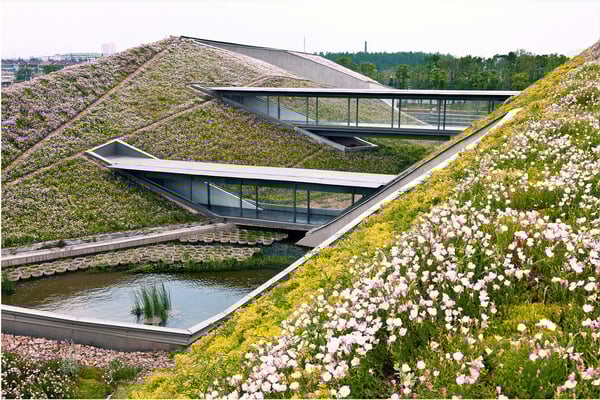
Image source: https://worldgreeninfrastructurenetwork.org/key-definition-green-roof/
Benefits that go beyond Stormwater Management
Urbanscape Green Roofs are more than just stormwater solutions—they are transformative tools for cities seeking sustainable development. Key benefits include:
- Urban Resilience: Reduce flooding risks and safeguard infrastructure.
- Climate Mitigation: Combat urban heat islands and improve air quality.
- Resource Efficiency: Reduce dependence on traditional drainage systems.
- Biodiversity Support: Provide habitats for urban wildlife.
- Visual Appeal: Transform cityscapes into vibrant green havens.
Literature:
Akther M., et al (2018): A review of green roof applications for managing urban stormwater in different climatic zones. Sustainability 2018, 10, 2864.
Perez, G., et al., 2025: Rock – mineral wool based green roofs to improve the quality of urban water runoff. Environmental Science and Pollution Research, 18th March 2025.